The Essentialism Paradox
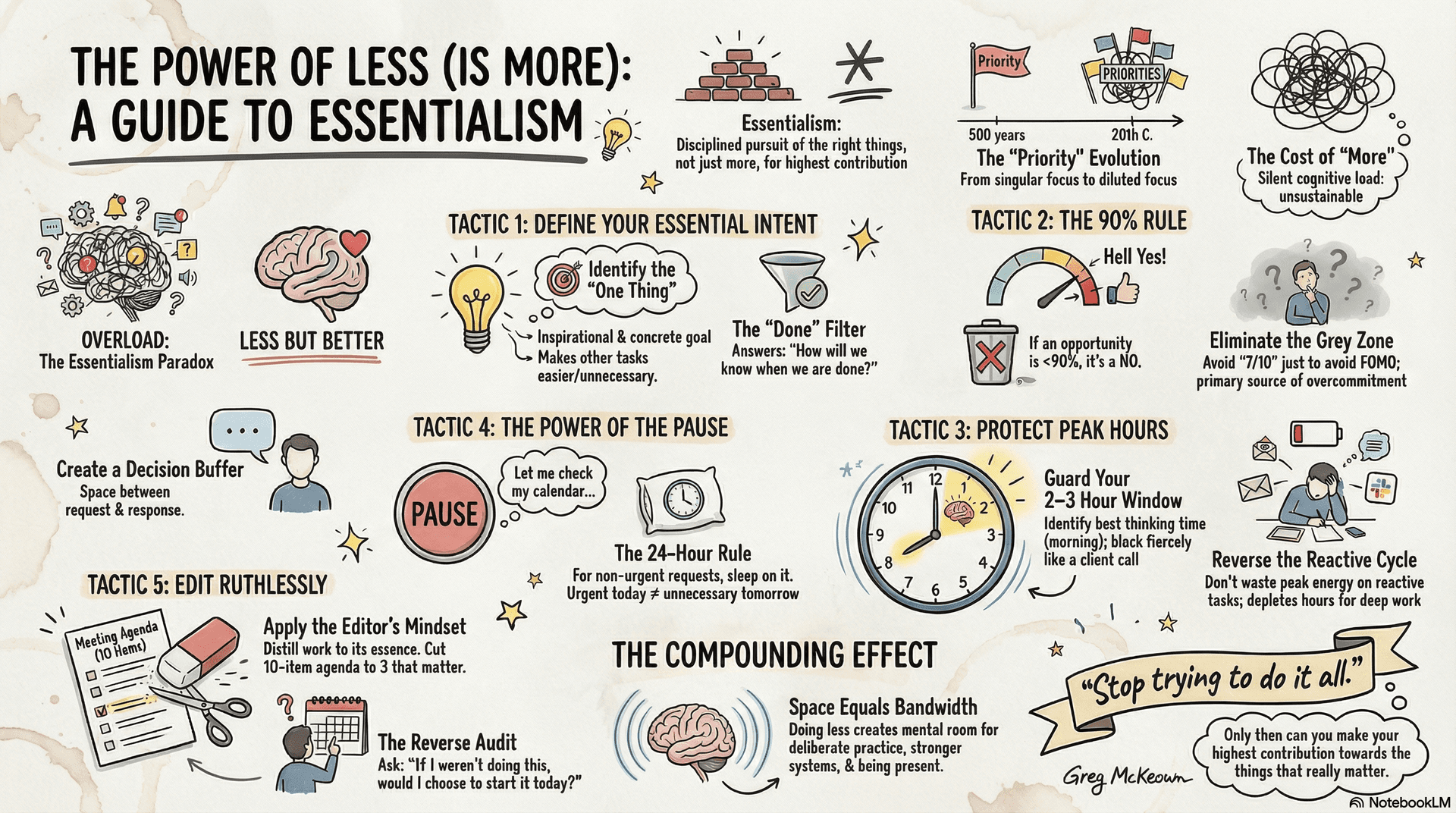
In a world drowning in “more” (more tools, more meetings, more notifications), the most radical act of productivity might be doing less. Essentialism, as defined by Greg McKeown, is the disciplined pursuit of less but better. It's not about volume. It's about doing the right things.
“Only once you give yourself permission to stop trying to do it all, to stop saying yes to everyone, can you make your highest contribution towards the things that really matter.”
Did you know that the word “priority” appeared in the 1400s, only as singular? Only in the 20th century did we start using it in plural, “priorities”, as well. Something about that feels revealing.
Having more options and more tools reduces focus. Every additional meeting on your calendar, every new software platform your team adopts, every reasonable-sounding request that lands in your inbox adds to a cognitive load that builds silently until it becomes unsustainable. The disciplined “no” is more powerful than any productivity hack because it removes the problem at the source rather than managing its symptoms.
The five tactics below are concrete applications of essentialist thinking. Each one is a small decision that, applied consistently, compounds until the noise just stops bothering you.
Tactic 1: Identify Your Essential Intent
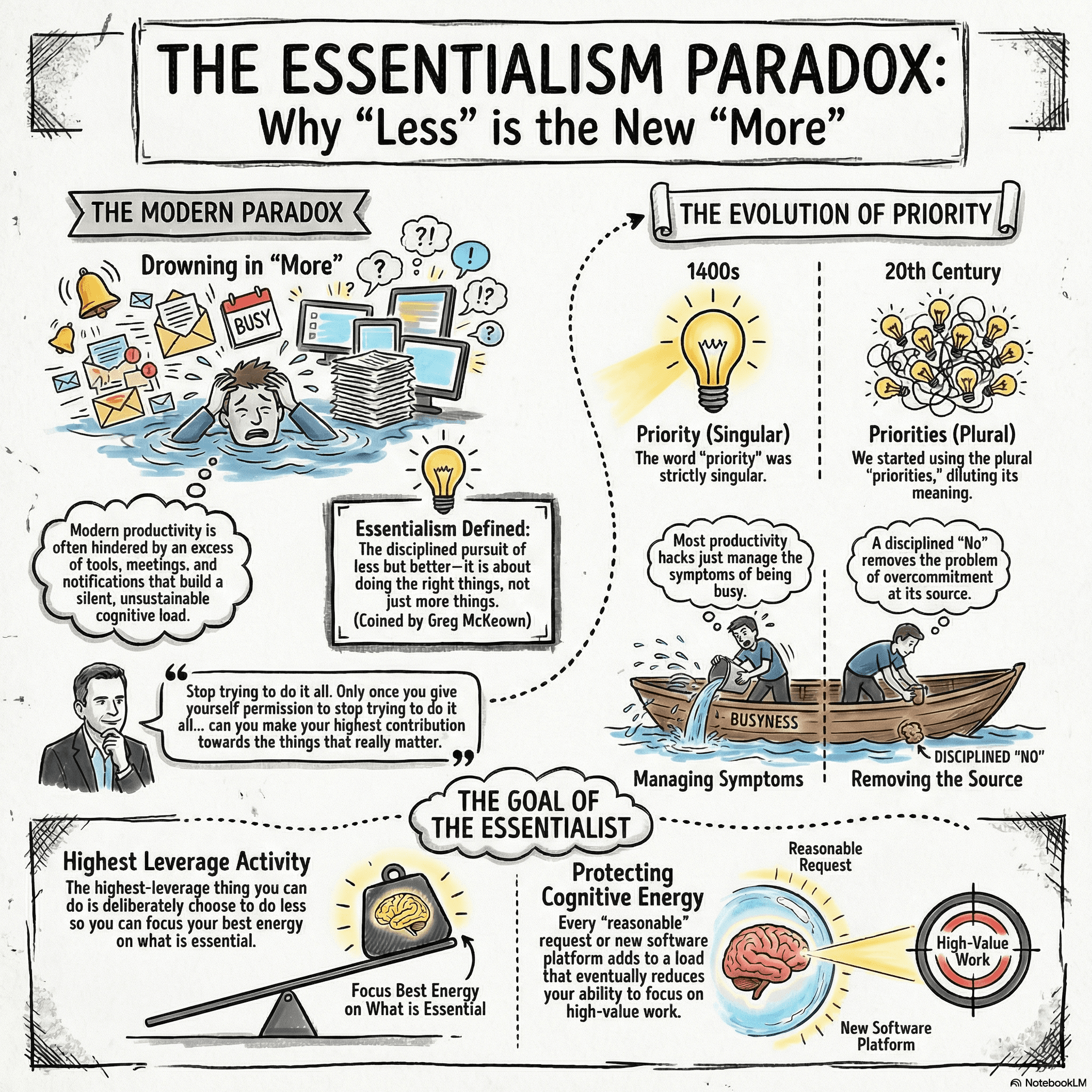
What is the one thing that would make everything else easier or unnecessary? Define it. Write it down. Let it be your filter for every decision.
The Essential Intentis the intersection of what you are deeply passionate about and what the world needs from you right now. Greg McKeown defines it as “both inspirational and concrete, both meaningful and measurable.” A good Essential Intent answers the question: “How will we know when we are done?”
In practice, this means writing it down and testing every significant decision against it. If a meeting, project, or commitment cannot be clearly linked to your Essential Intent, pay attention to that.
Tactic 2: The 90% Rule
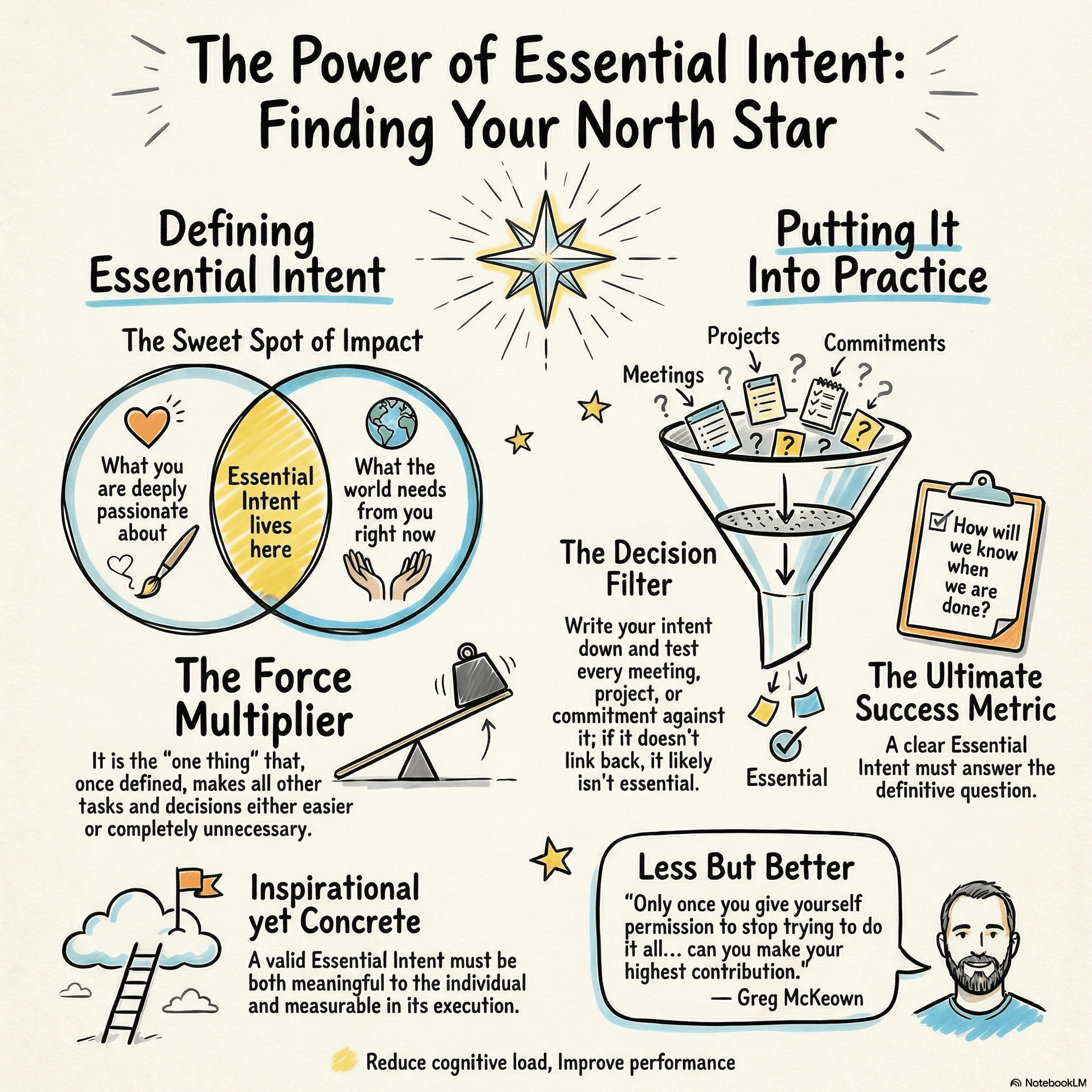
When evaluating an opportunity, if it isn't a clear “Hell Yes!” (above 90%), then it's a “No”. This applies to meetings, projects, and even emails.
The grey zone is where most of our overcommitment lives. We say yes to things that are a 7 out of 10 because they seem reasonable, interesting, or because we fear missing out. The 90% Rule eliminates the grey zone entirely by raising the bar to the point where the decision becomes obvious.
When you apply this consistently, the decision starts making itself: fewer commitments, better ones, executed with full energy and attention instead of a sprawling list of half-hearted yeses.
Tactic 3: Protect Your Peak Hours
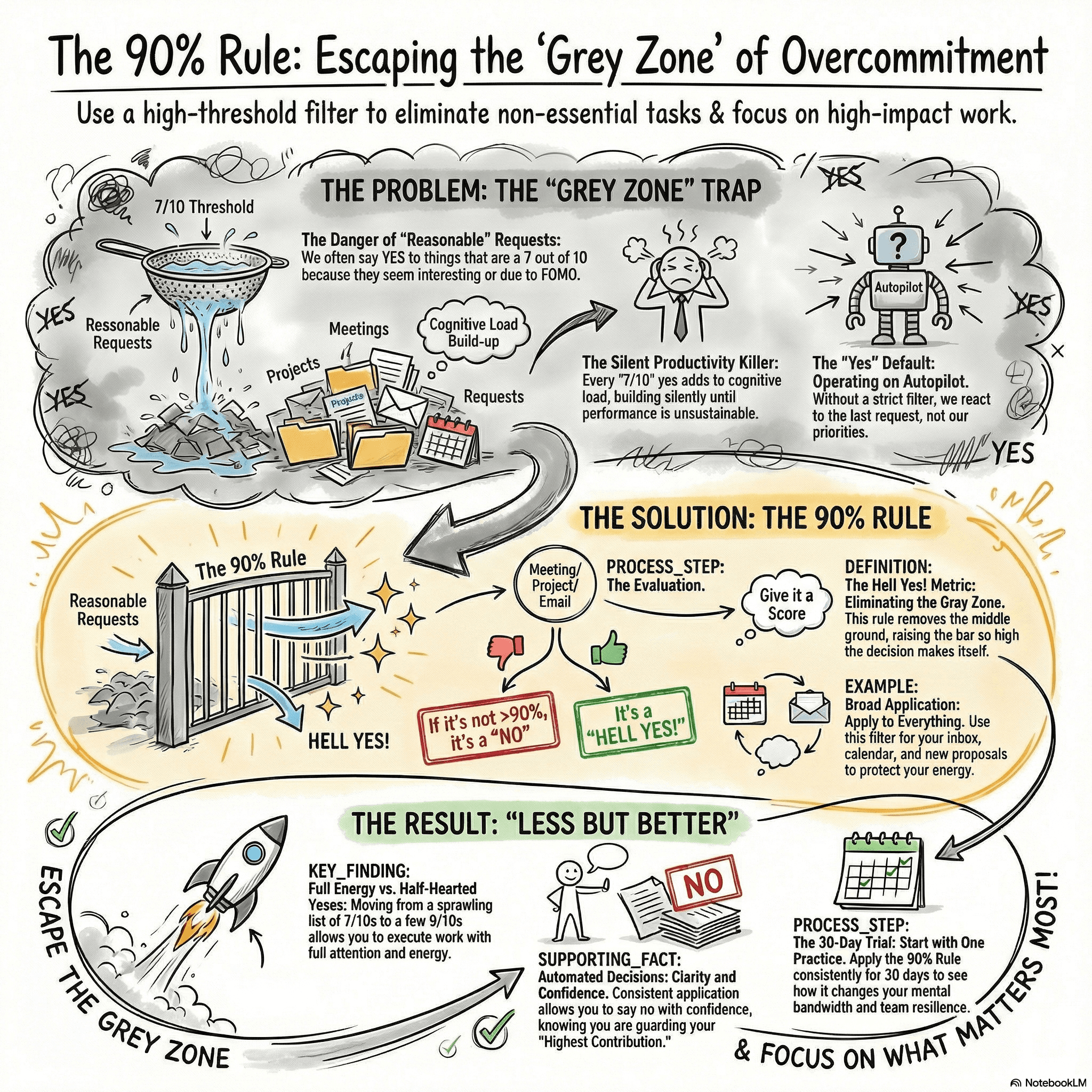
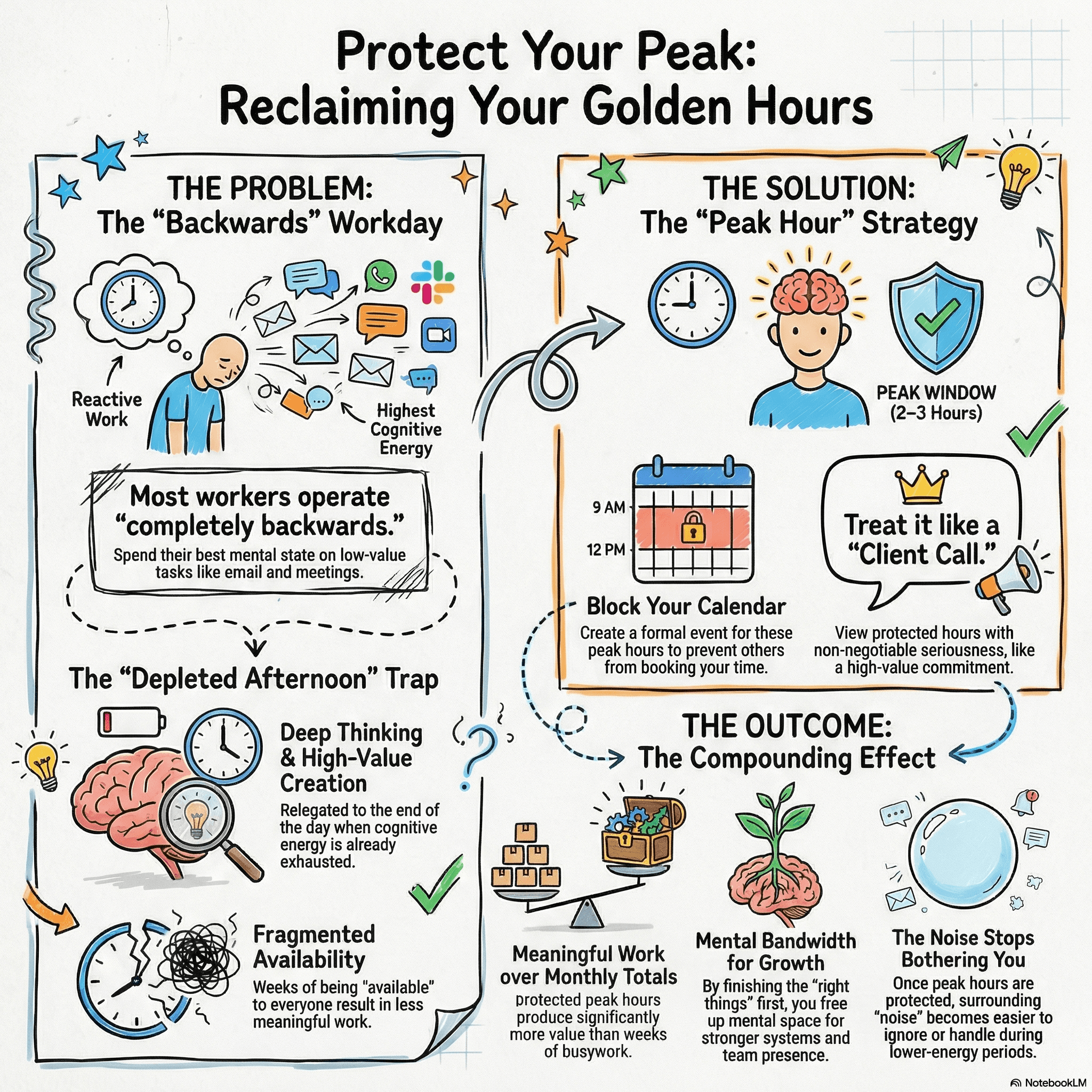
When do you do your best thinking? For most people, it is a 2–3 hour window, usually in the morning. Guard those hours fiercely for your most important work.
Most knowledge workers spend their cognitive peak hours on reactive work (email, Slack, stand-ups) and reserve their depleted afternoon hours for the deep thinking that actually creates value. That is completely backwards.
Block your peak hours in your calendar as if they were an external commitment. Treat them with the same seriousness you would a client call. Over a month, you will produce more meaningful work in those protected hours than in weeks of fragmented availability.
Tactic 4: The Power of the Pause
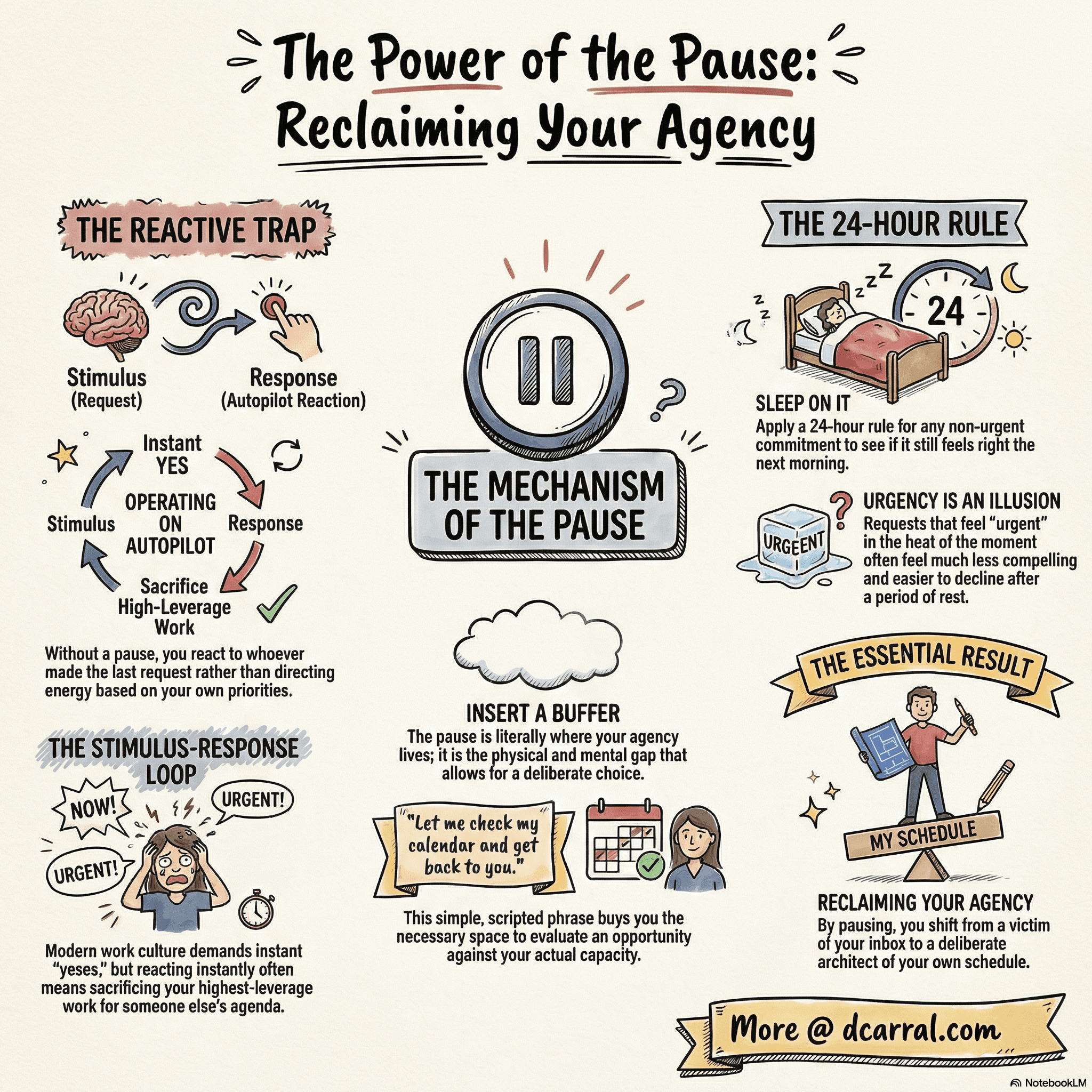
Before reacting to every new request, create a buffer. The simple phrase “Let me check my calendar and get back to you” buys you the space to make a deliberate choice.
The pause is where your agency lives. Without it, you are operating on autopilot, reacting to whoever made the last request rather than directing your energy based on your own priorities. The pause creates space between stimulus and response.
A simple technique: for any non-urgent commitment, use a 24-hour rule. Sleep on it. The requests that feel urgent in the moment often feel much less compelling the next morning, and the ones that still feel right are worth saying yes to.
Tactic 5: Edit Ruthlessly
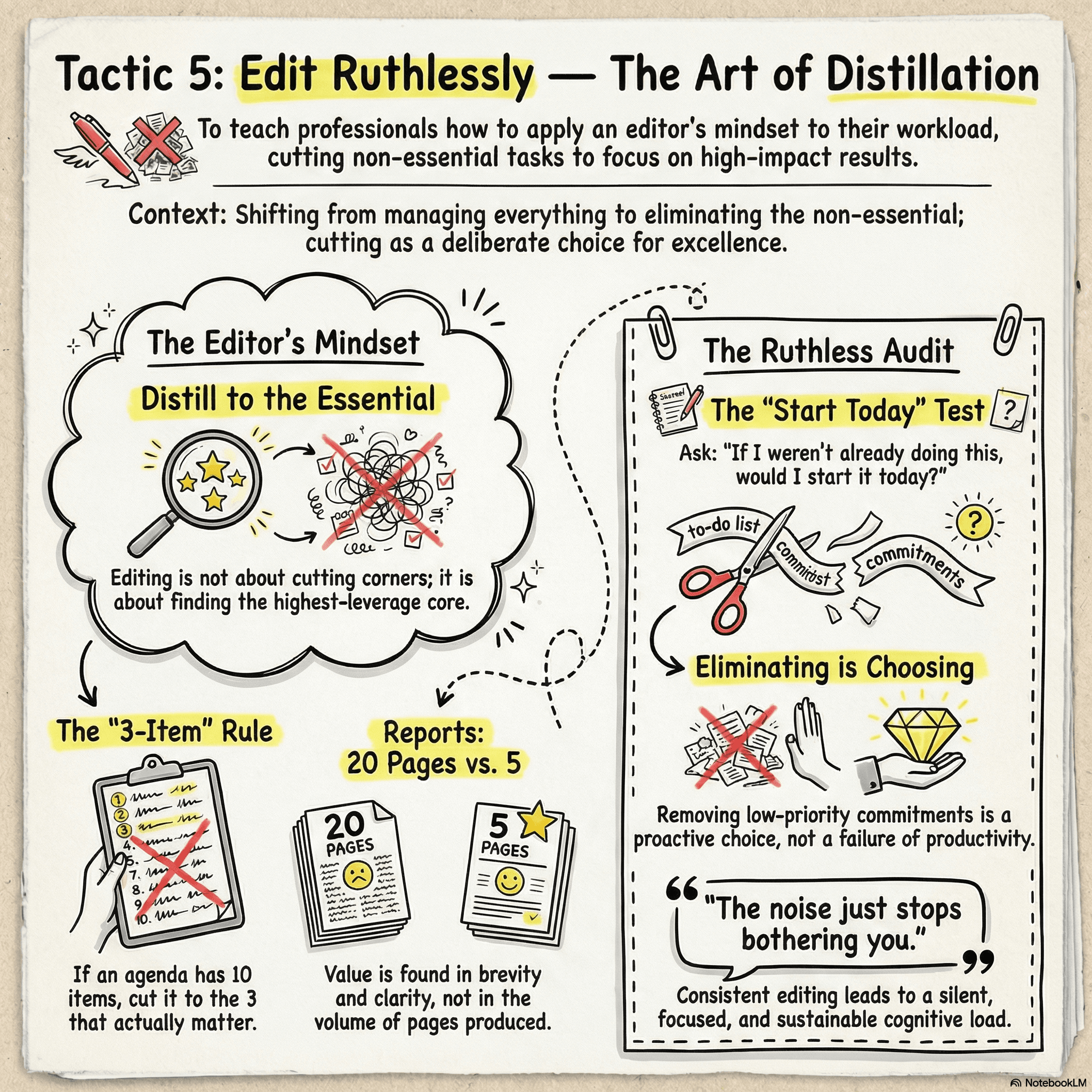
I once sat in a meeting with a 14-item agenda. We got through three. The rest did not matter, and never had.
Apply the editor's mindset to your work. If a meeting agenda has 10 items, cut it to 3. If a report has 20 pages, make it 5. Ruthless editing is not about cutting corners; it is about distilling to the essential.
Start by auditing your current commitments. For each one, ask: “If I were not already doing this, would I choose to start it today?” If the answer is no, that is an invitation to reconsider. Eliminating low-priority commitments is not failing; it is choosing.
The Foundation for Everything Else
When you create space by doing less, you create the mental bandwidth for the strategies that truly matter. You can engage in deeper deliberate practice. You can build stronger systems. You can be more present with your team. Essentialism is not a productivity hack; it's a philosophy: a way of being that allows you to contribute at your highest level.
The compounding effect
The paradox of essentialism is that doing less often leads to achieving more, because the things you do are the right things, executed with full attention and energy. Teams that embrace essentialism become faster decision-makers, better prioritisers, and more resilient under pressure.
Start with one practice this week. Choose the tactic that resonates most (whether it is defining your Essential Intent, implementing the 90% Rule, or blocking your peak hours) and apply it consistently for 30 days. One principle, applied with intent, changes more than you'd think.
✓Key Takeaways1 / 6
Essentialism is not a productivity hack; it is a philosophy of contribution at your highest level.